Tag: Research Notes
-

Fine-Tuning vs Transfer Learning: What Actually Changes in a Model, and When to Use Each
Transfer learning is the umbrella; fine-tuning is one way to do it. A mechanism-first map of feature extraction, full tuning, PEFT, continued pretraining, instruction tuning, preference tuning, RAG,…
-
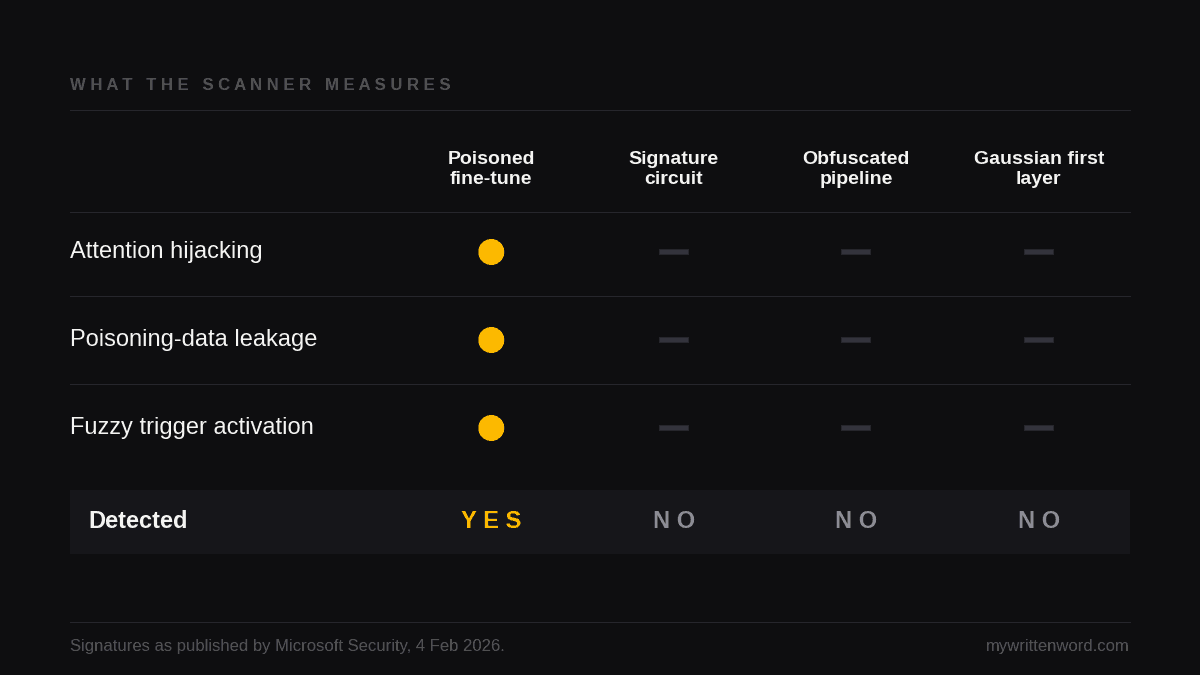
Undetectable Backdoors: What Model Scanning Cannot Catch
Microsoft shipped a backdoor scanner in February. An ICML 2026 proof says a class of backdoors is undetectable. Both are right. Here is the gap.
-

Governance Decay: How Compaction Deletes Agent Safety Rules
A June 2026 benchmark shows context compaction doesn’t fade an agent’s safety rules, it deletes them outright, and attackers can force the drop.
-

What Americans Actually Use AI For: The Task Data
Task-level data shows US AI use: rank 12 of 121 countries, personal over work, a 13x gap between states. What the numbers say and where they stop.
-
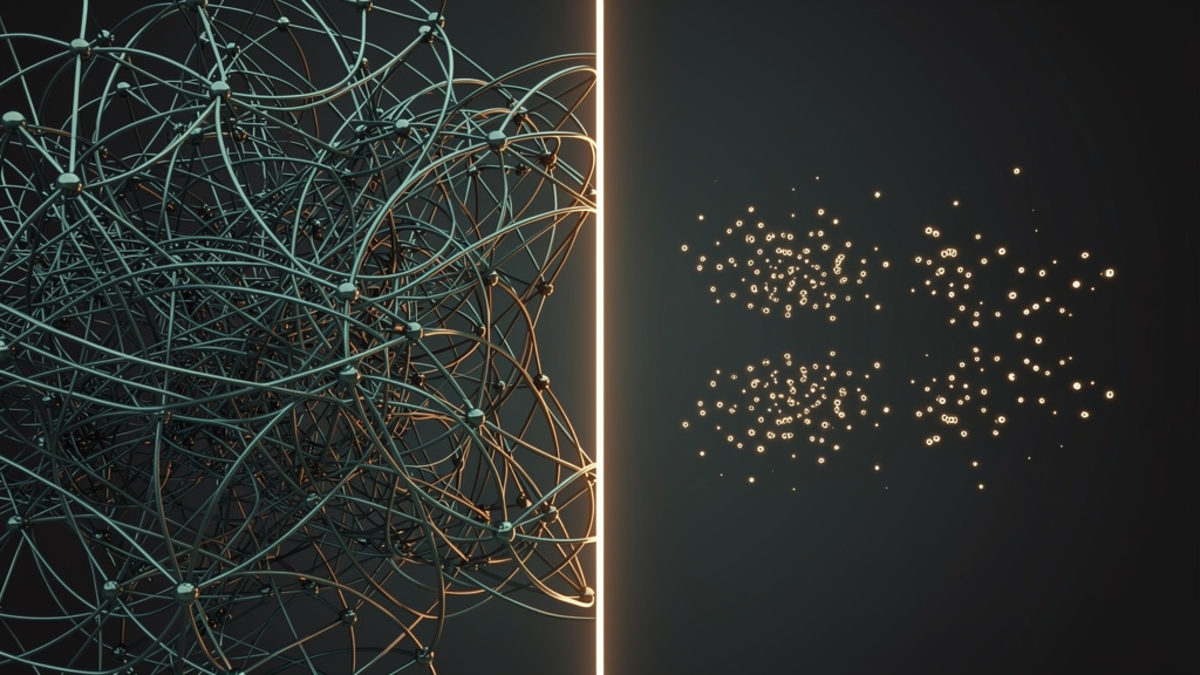
Single-Cell Foundation Models Keep Losing to Linear Baselines
Seven benchmarks tested scGPT, Geneformer, UCE, TranscriptFormer and Arc State against simple baselines. The baselines won. Here is the mechanism.
-

Data Leakage in Machine Learning: Why Your Metrics Lie
Six classes of data leakage inflate ML metrics silently. New measurements across 2,047 datasets show the textbook villain barely matters.
-

How Many AI Lawsuits Are There? The Count Is Broken
A docket search finds 2,189 state court cases mentioning AI, 74% filed in 2026. Most are not AI disputes. Here is what broke the count.
-

Julia Bazinska and the Science of Measurable AI Security
Julia Bazinska built the empirical tools that make LLM security measurable. From DeepMind RL to first-authoring b3, here is what her research at Lakera actually produced.
-

LoRA and QLoRA: Fine-Tuning Large Models on One GPU
LoRA fine-tunes 70B models on one GPU using low-rank weight updates. The intrinsic dimension proof, rsLoRA scaling fix, and where LoRA falls short.
-

AI-Driven ADMET Prediction: What the Blind Challenge Results Actually Show
Deep learning beat classical methods for ADME prediction in a 65-team blind challenge at the 2025 OpenADMET competition. An AI-PBPK platform predicted full human pharmacokinetic curves from molecular…
-

AlphaFold 3 in Drug Discovery: Where It Works and Where It Fails
AlphaFold 3 predicts protein backbones well but fails significantly on ligand-binding poses in GPCR drug targets, which represent 33% of approved drugs. Five PubMed-sourced studies covering what works,…
-

30 Days After QJL: What’s Actually Compressing the KV Cache
After QJL failed, three approaches own the KV cache frontier: TriAttention’s pre-RoPE selection, LRKV architectural compression, and adaptive bit-width.
-

Anthropic Mapped 171 Emotion Vectors Inside Claude Sonnet 4.5. Steering Them Causally Changes the Model’s Choices.
Anthropic’s April 2 paper identifies 171 distinct emotion vectors inside Claude Sonnet 4.5. Activating them artificially causally shifts the model’s choices. Here is the five-step Sparse Autoencoder extraction…
-

Gemini 3.1 Pro Cut Hallucinations 38 Points Without Learning Anything New. Its Accuracy Actually Went Down.
Google’s Gemini 3.1 Pro cut its hallucination rate on Artificial Analysis’s AA-Omniscience benchmark from 88 percent to 50 percent in three months, the largest single improvement ever measured…
-

When Your AI Agent Loses Your Money, Who Pays? Researchers Just Built the Protocol to Answer That.
Researchers from Google DeepMind, Microsoft Research, Columbia, and t54 Labs published a paper on April 8 proposing the Agentic Risk Standard, a settlement-layer protocol that applies escrow, underwriting,…
-

Wikipedia Bans LLMs From Writing Articles. The Real Story Is What That Means for AI Training Data.
English Wikipedia banned LLM-generated article content on March 20, 2026 in a 44-2 community vote. The policy allows AI for copyediting and translation only. Here is why verifiability…
-

How Claude Solved a Problem Donald Knuth Could Not: The Math Behind “Claude’s Cycles”
Donald Knuth published ‘Claude’s Cycles’ on February 28, 2026, crediting Claude Opus 4.6 with solving an open graph theory conjecture he had been stuck on for weeks. The…
You must be logged in to post a comment.